 blog
blog
Hair Care for Busy Professionals: 7 Time-Saving Routines
Table of Contents
- Why Hair Care Routines Matter for Busy Professionals
- Building a Quick Hair Care Routine That Actually Fits Your Schedule
- Low-Maintenance Professional Hairstyles That Command Presence
- Time-Saving Hair Products That Deliver Results
- How to Make a Blowout Last Longer Between Appointments
- Wash Frequency and Scalp Health for Your Hair Type
- Common Mistakes That Waste Your Time and Damage Your Hair
- Maintaining Your Look Between Professional Styling Sessions
- Frequently Asked Questions
Last Updated: October 11, 2026
Why Hair Care Routines Matter for Busy Professionals
Most busy professionals skip hair care entirely, assuming they lack time. The result: hair that looks tired, breaks easily, and demands more attention than a routine would require.
Hair care busy professionals need is a real routine that can fit into your actual life, not some fantasy version where you have unlimited time.
The best hair care for busy professionals starts with one principle: work with your hair type, not against it. A precision cut that suits your texture means less styling time. The right products mean fewer steps.
This guide covers time-saving routines: the 5-minute morning protocol, efficient wash day strategies, low-maintenance cuts, products that replace multiple steps, and how to extend blowouts between appointments.
Building a Quick Hair Care Routine That Actually Fits Your Schedule
Identify your actual constraints: Do you have 5 or 15 minutes in the morning? Do you wash on weeknights or weekends? Your routine should fit your real schedule.
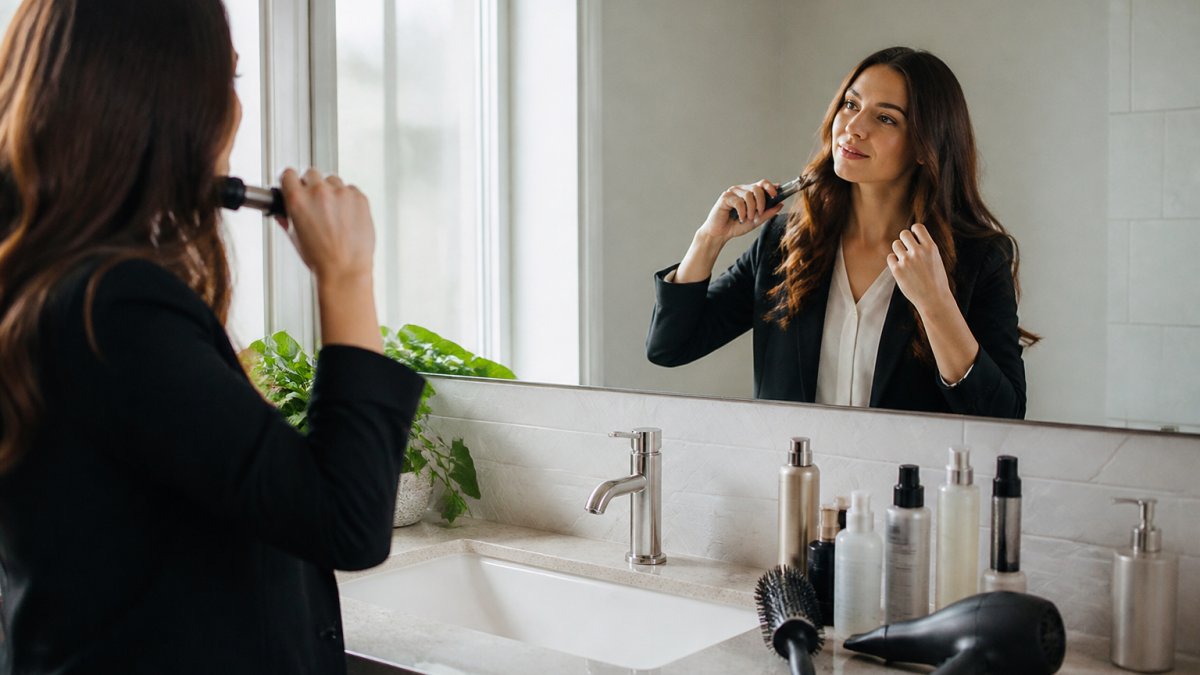
A consistent routine takes less mental energy than improvising each day and reduces decision fatigue.
The 5-Minute Morning Protocol
Start with texturizing spray or dry shampoo if you washed yesterday. Spray at the roots, let it sit 30 seconds, then brush through.
Address flyaways with a small amount of smoothing serum on your palms, pressed lightly onto the surface (not roots). Less is always more.
For more texture, use lightweight styling cream worked through with your fingers for better control.
Finish with texture spray or light hairspray. The whole process takes 3-5 minutes.
Wash Day Strategy for Weeknight or Weekend
Pick one day and stick with it. Your scalp adjusts to a consistent schedule.
Block 30-45 minutes. This includes shampooing, conditioning, a quick deep treatment if needed, and basic drying. Here's the sequence:
- Wet your hair thoroughly with warm water (2 minutes)
- Shampoo, focusing on the scalp (2 minutes)
- Rinse completely (2 minutes)
- Apply conditioner to mid-lengths and ends (1 minute)
- While conditioner sits, shower or do something else (5-10 minutes)
- Rinse conditioner (2 minutes)
- Apply a leave-in treatment or styling product (1 minute)
- Rough dry with a towel to remove excess water (3 minutes)
- Air dry or blow dry depending on your style (10-20 minutes)
Multitask during conditioning: shower, brush your teeth, or check email.
When blow-drying, focus on roots first, they take longest. You can skip ends if short on time.
Low-Maintenance Professional Hairstyles That Command Presence
Your haircut is the foundation. A good cut means your hair does half the work for you.
Precision Cuts That Style Themselves
The best cuts are shorter or layered. Short hair requires regular trims but minimal daily styling. Layered cuts add texture that looks intentional without styling.
A precision cut uses angles and weight distribution that encourage your natural wave or curl to work for you.
Avoid blunt, one-length cuts if you have fine hair or texture. A cut with movement requires less styling.
Ask your stylist to cut your hair dry or damp so they're cutting it as it will actually sit.
Color and Texture Choices for Minimal Upkeep
Color-treated hair requires maintenance. But some choices require less than others.
Lived-in color, subtle dimension that doesn't rely on a sharp line, requires fewer touch-ups than solid color. Balayage or face-framing highlights can go 8-12 weeks between appointments. Solid color root touch-ups are needed every 4-6 weeks.
If you're covering gray, consider a color that's close to your natural shade. The closer the match, the longer you can go between appointments.
Texture treatments like perms or relaxers require maintenance, but they can reduce daily styling time significantly. A professional texture treatment means you can air dry and still have defined waves or curls.
If you're not ready for a texture treatment, work with your natural texture. Curly hair benefits from curl-specific products and techniques. Straight hair benefits from smoothing products. Fine hair benefits from volumizing products.
Time-Saving Hair Products That Deliver Results
The right products eliminate steps. The wrong products create more work.
Multitasking Products That Replace Steps
A 2-in-1 shampoo and conditioner saves time but often doesn't clean or condition well. Skip it. Instead, use a regular shampoo and a lightweight conditioner that you can apply quickly.
What actually saves time:
- Leave-in treatments that replace separate conditioning steps
- Dry shampoo that extends time between washes
- Styling creams that add hold and texture without requiring hairspray
- Heat protectant sprays that also add shine or smoothing
The best multitasking products are ones that do two things you actually need done. A leave-in treatment that also detangles saves you both steps. A dry shampoo that also adds texture means you're not using two products.
Quality matters here. A good dry shampoo absorbs oil without leaving white residue. A cheap one looks chalky and requires more brushing. Spend a bit more on products you use daily.
Heat Protection and Styling Efficiency
If you blow dry, use a heat protectant. This takes 10 seconds and prevents damage that would require more intensive treatments later.
Fast-drying tools matter. A high-wattage blow dryer cuts drying time significantly. A concentrator nozzle focuses heat where you need it. These tools cost more upfront but save time every single day.
When blow-drying, rough dry first. Use your fingers or a wide-tooth comb to direct hair while it's damp. Once it's 60-70% dry, switch to a brush and finish. This approach takes less time than trying to style soaking wet hair.
For styling, use a light hand. A little product goes far. Overloading your hair with product requires more brushing and often looks heavier than intended.
How to Make a Blowout Last Longer Between Appointments
A professional blowout can last 3-5 days if you treat it right. Most people destroy it in one day by not knowing how to maintain it.
Overnight Care and Silk Pillowcase Strategy
A silk pillowcase is not a luxury, it's a tool. Cotton pillowcases create friction that breaks hair and causes frizz. Silk reduces friction dramatically.
On nights you want to preserve your blowout, use a silk pillowcase. You'll notice the difference immediately. Your hair will look fresher the next morning with minimal touch-ups.
If you don't have a silk pillowcase, a silk sleep cap works. Some people use a loose bun or braid to protect their blowout overnight. The goal is minimizing friction and preventing your hair from being crushed flat against the pillow.
Sleep position matters too. Try sleeping on your back or the side of your hair that's less important. This sounds silly but it works.
Dry Shampoo and Refresh Techniques
On day two or three, your roots will start to look oily. Dry shampoo fixes this in seconds.
Spray dry shampoo at the roots, let it sit for 30 seconds, then brush through. This absorbs oil and adds texture. Your blowout looks fresh without a full wash.
For the rest of your hair, a light mist of texture spray adds grip and prevents it from looking flat. You're not creating a new style, you're refreshing what's already there.
If your ends are dry or frizzy by day three, a tiny amount of smoothing serum on your palms, pressed onto the surface, fixes it.
Most blowouts can go three days easily. By day four, you're usually better off washing. This means you can go 3-4 days between professional blowouts if you maintain properly, saving time and money.
Wash Frequency and Scalp Health for Your Hair Type
How often you should wash depends entirely on your hair type and scalp condition.
Fine or thin hair often needs washing more frequently because oil shows easily. Coarse or curly hair can go longer because natural oils travel down the hair shaft more slowly.
Oily scalp with dry ends is common. The solution isn't washing more, it's conditioning only the ends and using dry shampoo on days you don't wash.
If you have scalp sensitivity or conditions like dandruff, wash frequency matters for scalp health, not just appearance.
Most people can train their scalp to go longer between washes. If you're washing daily, your scalp produces more oil because it's being stripped.
The goal isn't a specific number of days. It's finding the frequency that keeps your scalp healthy and your hair looking good.
Common Mistakes That Waste Your Time and Damage Your Hair
Most time-wasting hair mistakes fall into a few categories.
Using the wrong products for your hair type wastes time because you're fighting your hair instead of working with it. Curly hair needs curl-specific products. Fine hair needs lightweight products.
Skipping heat protection and deep conditioning seems like time-saving. It's not. Damage requires expensive treatments and more intensive styling.
Washing too frequently strips your scalp and creates a cycle where you have to wash more often. Washing too infrequently means your hair looks oily and requires more styling to look polished.
Choosing a haircut based on trends instead of your hair type is a common mistake. A trendy cut that doesn't suit your texture requires constant styling.
Not getting regular trims means your ends get damaged and split. Damaged ends require more conditioning and styling. Regular trims (every 6-8 weeks) prevent this.
Maintaining Your Look Between Professional Styling Sessions
Professional styling, whether a cut, color, or blowout, is an investment. Maintaining that investment between appointments keeps it looking fresh and extends the time between visits.
For cuts, this means getting trims on schedule. A cut grows out quickly.
For color, this means using color-safe products and minimizing heat styling, which fades color faster. A good color-safe shampoo and conditioner matter more than you think.
For blowouts, maintenance means using dry shampoo and silk pillowcases to extend the style. Most people can go 3-4 days between professional blowouts with proper care.
At Kesley Studio, our precision styling focuses on cuts and color that work with your hair, not against it.
The real time-saver isn't a product or technique, it's a consistent routine matched to your actual schedule and hair type. Once you have that, everything else becomes easier.
Managing your hair shouldn't feel like another task on your to-do list. If you're ready to build a hair care routine that actually fits your schedule, Kesley Studio specializes in precision styling tailored to your hair type and lifestyle. Schedule a consultation through our online booking system to get started.
Frequently Asked Questions
What is the best hair care routine for busy professionals?
The best routine combines a precision haircut that requires minimal styling, a 5-minute morning protocol using multitasking products, and a weekly wash day scheduled for your least hectic day. Focus on gentle cleansing and conditioning suited to your hair type, air-drying or quick blow-dry techniques, and dry shampoo between washes to extend time between salon visits. This approach keeps your hair healthy while fitting seamlessly into a packed schedule.
How can I make a blowout last longer between appointments?
Sleep on a silk pillowcase to reduce friction and frizz overnight. Apply dry shampoo at the roots 2-3 days after your blowout to absorb oil and refresh volume. Use heat protection spray before any heat styling, and avoid touching your hair excessively throughout the day. Keep your scalp healthy with gentle cleansing to prevent excess oil buildup that flattens your style. With proper maintenance, blowouts can be extended between washes.
What low-maintenance haircuts work best for professionals?
Precision cuts with built-in layers, textured bobs, and short crops are designed to fall into place with minimal styling. Ask your stylist for a cut that works with your natural hair texture and can be air-dried or quickly styled with a blow-dryer. Color-treated hair benefits from lived-in color techniques that hide regrowth, reducing salon visits. A good low-maintenance cut should look polished after just 5 minutes of styling in the morning.
How often should busy professionals wash their hair?
Most professionals benefit from washing 2-3 times per week, depending on hair type and scalp health. Fine or oily hair may need more frequent washing, while thicker or dry hair can go longer between washes. Use dry shampoo on non-wash days to extend time between shampoos and maintain volume. Gentle cleansing products help preserve scalp health and color-treated hair, allowing you to stretch time between washes without buildup or damage.